
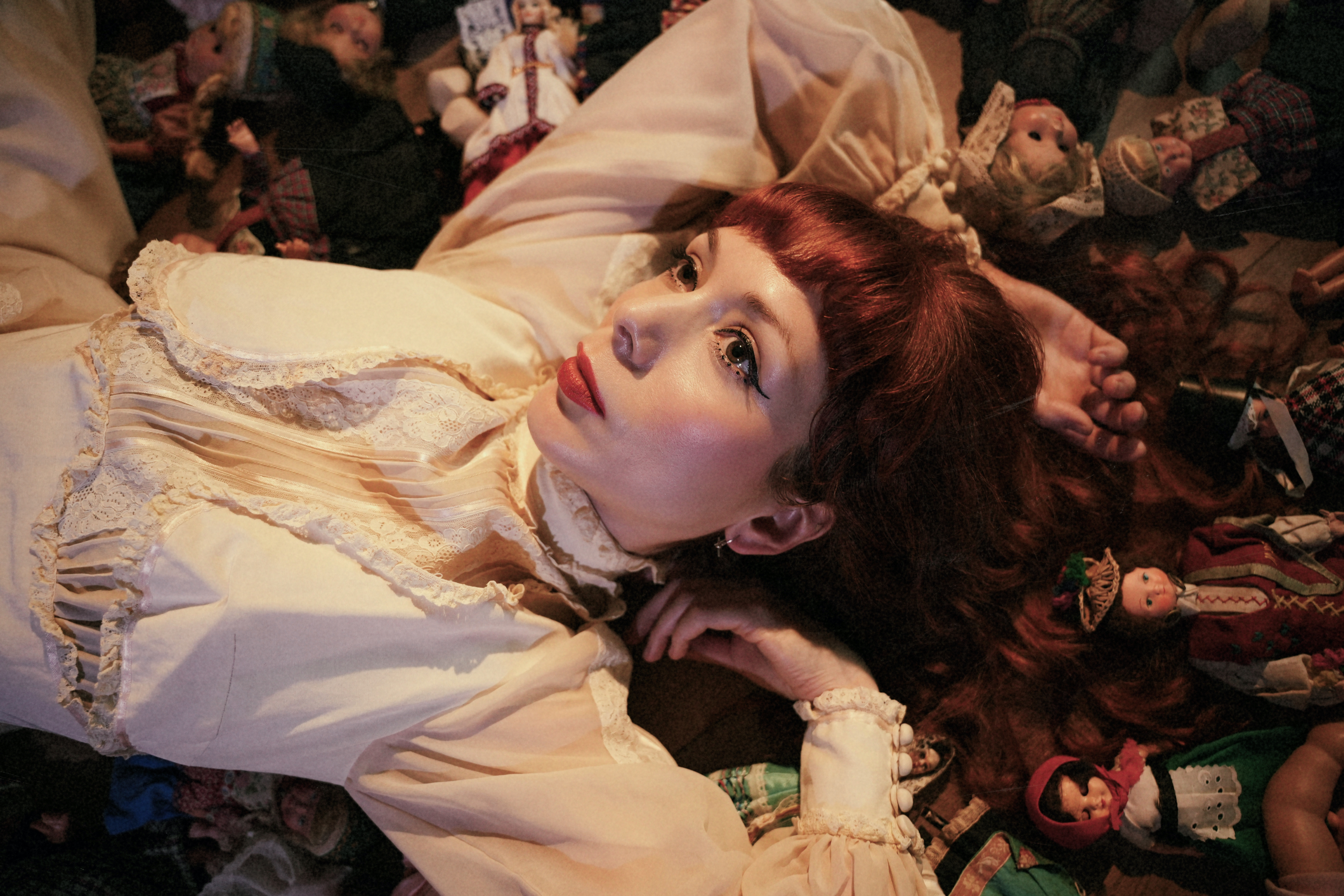
In As We Once Were, Catherine Anne Davies, the artist behind The Anchoress, looks back to understand how much of the past is still shaping the present. The starting point is intensely personal: motherhood, grief, family memories, and the wounds passed down from one generation to the next. That’s why this isn’t a story she tells alone. Her grandmother and daughter are here too, alongside family voices salvaged from old tapes and a whole lineage of women who have acted as guides, refuge and mirrors.
That sense of everything clicking into place isn’t just in the lyrics; it’s built into the record itself. As We Once Were moves through prologues, reprises and motifs that keep coming back in altered forms, quite consciously drawing on the architecture of Kate Bush’s Hounds of Love, particularly “The Ninth Wave”. From there, Catherine gives herself plenty of room to move. “Throw Over Your Man” has some of the muscle and choral grandeur of Florence + the Machine, not so much in the voice as in the way it keeps winding up the tension until the whole thing opens out. “I Had a Baby Not a Lobotomy” leans hard into synth-pop, with Pete Townshend’s ARP 2500 adding extra bite, while “Damsels” heads into luminous dream pop and the title track wraps atmospheric guitars around bright, sticky synth-pop. Hannah Peel also brings an extra layer of delicacy to “All Fall Down”, while later tracks push into rougher, more expansive art-rock territory.
“All I Really Want Is Peace” slows things down with a warm, melancholy ballad, while “Stop the World” turns much more fragile and unsettling, its layered vocals nodding to Brian Wilson. Later, “What You Did” and “Hand to the Tide” get rougher and more unpredictable, moving through art rock, post-punk and prog, with the latter even tipping into math rock.

And then there are the lyrics. “I Had a Baby Not a Lobotomy” uses black humour to tear into the clichés and everyday misogyny surrounding motherhood. “Damsels” lines up historical and feminist figures like women holding hands across centuries. “As We Once Were” looks back at first love and the impossibility of ever becoming who we once were again, but also at that weird trick memory plays when a house, a photo or one stupid little detail suddenly drops you back into a previous version of yourself. Later, “Stop the World”, “What You Did” and “Hand to the Tide” go somewhere much darker: trauma, abuse, fear, and the damage that gets carried forward when nobody knows what to do with it. Again and again, the record comes back to the same question: can you name what happened, work out what you inherited, and stop handing it on to the next person?
By the end of As We Once Were, it feels like Catherine has let us into something extremely private without ever making the record feel sealed off from the outside world. She writes about motherhood, grief, memory, desire and trauma from right inside them, but keeps pulling those experiences into something bigger.
That’s the trick of the album, really. It’s intimate without shrinking, ambitious without disappearing up its own arse, and emotionally heavy without turning into misery tourism. Catherine has made a record about what gets passed down, what gets stuck, and what we might finally choose to break.
Follow The Anchoress’ journey on Instagram | Website | Bandcamp | YouTube