
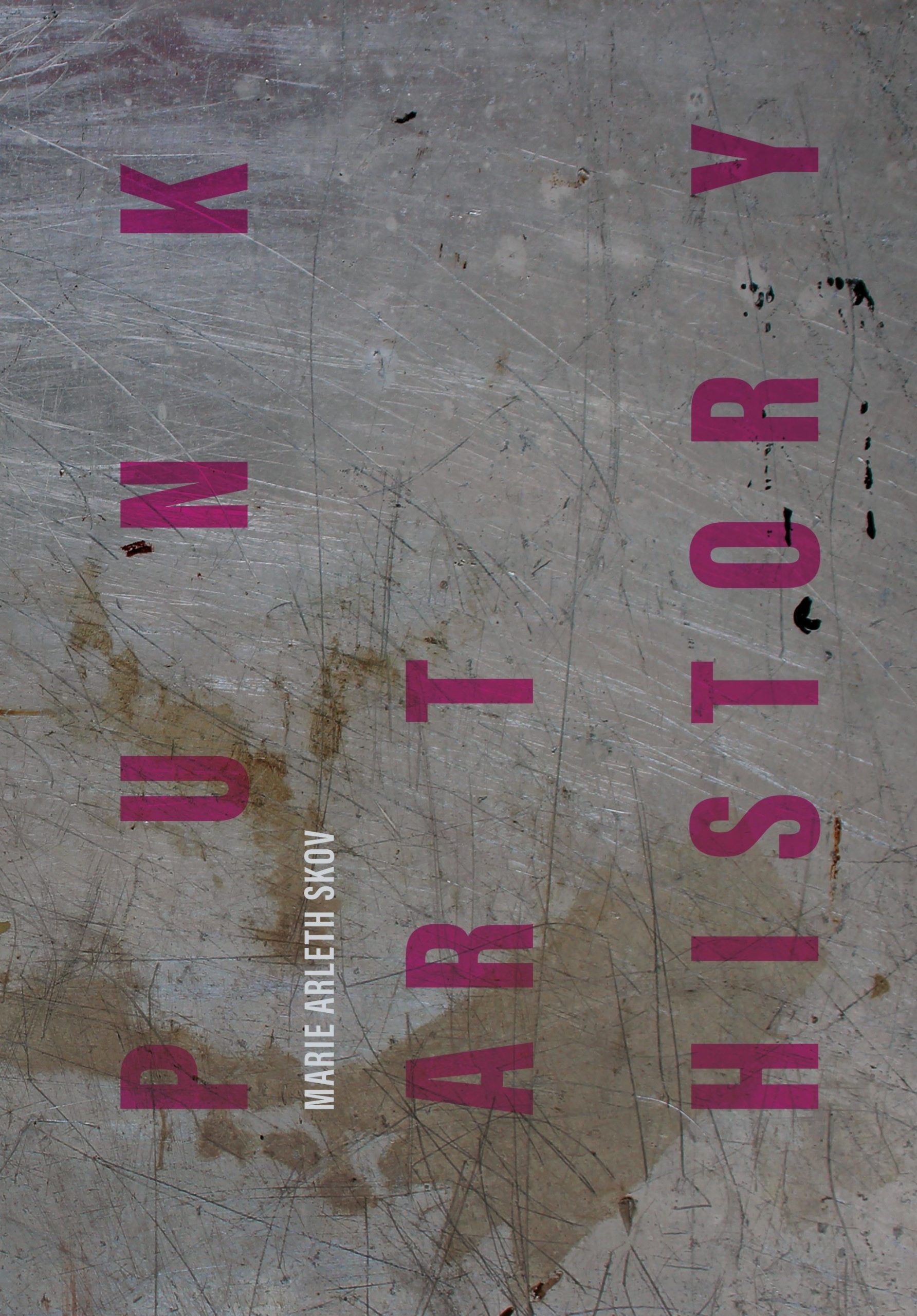
Punk Art History, Skov, M. A., Bristol & Chicago: Intellect, 308 pp., ISBN 9781789387001, p/bk, £29.95. Reviewed by Grace Healy
Punk Art History is a dazzling and original exploration of punk’s relationship to contemporary art. Skov has produced a rigorously-researched, engaging, and accessible journey into punk’s art-historical foundations. Drawing on her PhD research, personal history, archival material, and interviews with those active within first-wave punk, Skov creates a tapestry of punk-art-history from Berlin, Copenhagen, Amsterdam, and London throughout the 1970s and 1980s. Her work is so rich it could be examined within a myriad of disciplines – art, music, subcultural studies, history, psychology – however, as a writer and researcher of punk and philosophy I found the philosophical threads running throughout Punk Art History the most fascinating and insightful aspect of her work.
Skov links punk to those art movements – amongst which she includes early twentieth-century avant-garde traditions Futurism, Dada, and Surrealism – which embrace (and critique) the following: destruction as creation; rejection of progress (or, at least, the notion of progress as constructed by Capitalism); fragmentation, decay, and collapse; disintegration of barriers between art and life; negation (as opposed to nihilism) as a springboard for creation; rejection of comprehensibility; embrace of failures, faults, and shortcomings; “exaltation of trash” (p. 85); the simultaneous embrace of both tradition and originality; incorporation of infantilism; cruelty- and amorality-as-autonomy; violence and rage; sexuality, lust, sadism, and submission; and principles central to the philosophy of Existentialism, including authenticity, freedom, and the rejection of authority. So many philosophical questions are raised – should art embrace or reject the Spectacle? Are the greatest achievements in life made through work or play? Can subversion be achieved through a postmodern play on surface? – an entire book could be written in response. However, I will briefly touch upon what I feel are the most interesting themes.
One of Skov’s central arguments is that whilst first-wave punk rejected ‘progress’ i.e., the Capitalist notion that society was evolving into something greater, and embraced negation, it didn’t reject the possibility of a future altogether. It was not, as some have argued, apolitical nihilistic despair. As John Lydon remarks in his 2014 autobiography Anger is an Energy: My Life Uncensored, “we were saying ‘No future’ in ‘God Save the Queen’, because you had to express that point in order to have a future” (p. 161). Early punk shattered the hegemonic narrative of progress as defined by Capitalism in an attempt to build something from the debris. Punk’s beauty lies in its ability to simultaneously embody both death and creation, and Skov demonstrates the plentiful ways in which punk-art captured this paradox. Furthermore, she eschews the ‘punk-as-postmodernism’ argument in favour of ‘punk-as-post-historical’, a reading which allows for a more fruitful discussion.
It is refreshing to finally come across a work that examines punk through a psychoanalytic lens, one which allows space for the threads of infantilism and sexuality – which are central to early punk – to be addressed in detail. Skov identifies both the magic and tragedy of punk’s tendency towards infantilism: whilst punks channelled childish wonder, imagination, and sensitivity to create both life and art that “denounces the cruelty of (grown-up) society” (p. 166) there was a darker side to this reality. Punks, for Skov, were society’s lost and abandoned children and their desire for childish play was rooted in harsh reality; creation was a route to omnipotence built from a desire for freedom (here Skov draws on Freud). As a final note, she situates punk on a continuum of thought traced from Marquis de Sade, through Nietzsche to Freud, that addresses the shadow of the human psyche and corruption of power (think COUM Transmissions). It’s exciting to discover that more is being written on the links between punk and Nietzsche.
There is so much more to this work than I have managed to capture here – you’ll have to read it to find out.
Punk Art History is available now direct from Intellect Books – or support your local independent bookshop by asking them to order it in.
Grace Healy is a writer, researcher and musician who specialises in punk and philosophy. In 2022 she completed a PhD entitled ‘“There is no authority but yourself”: Tracing first-wave British punk philosophy, from Nietzsche to Rotten’, which situates punk within the philosophy of Existentialism, at the University of Huddersfield. She is currently head of the UK branch of Punk Scholars Network.