
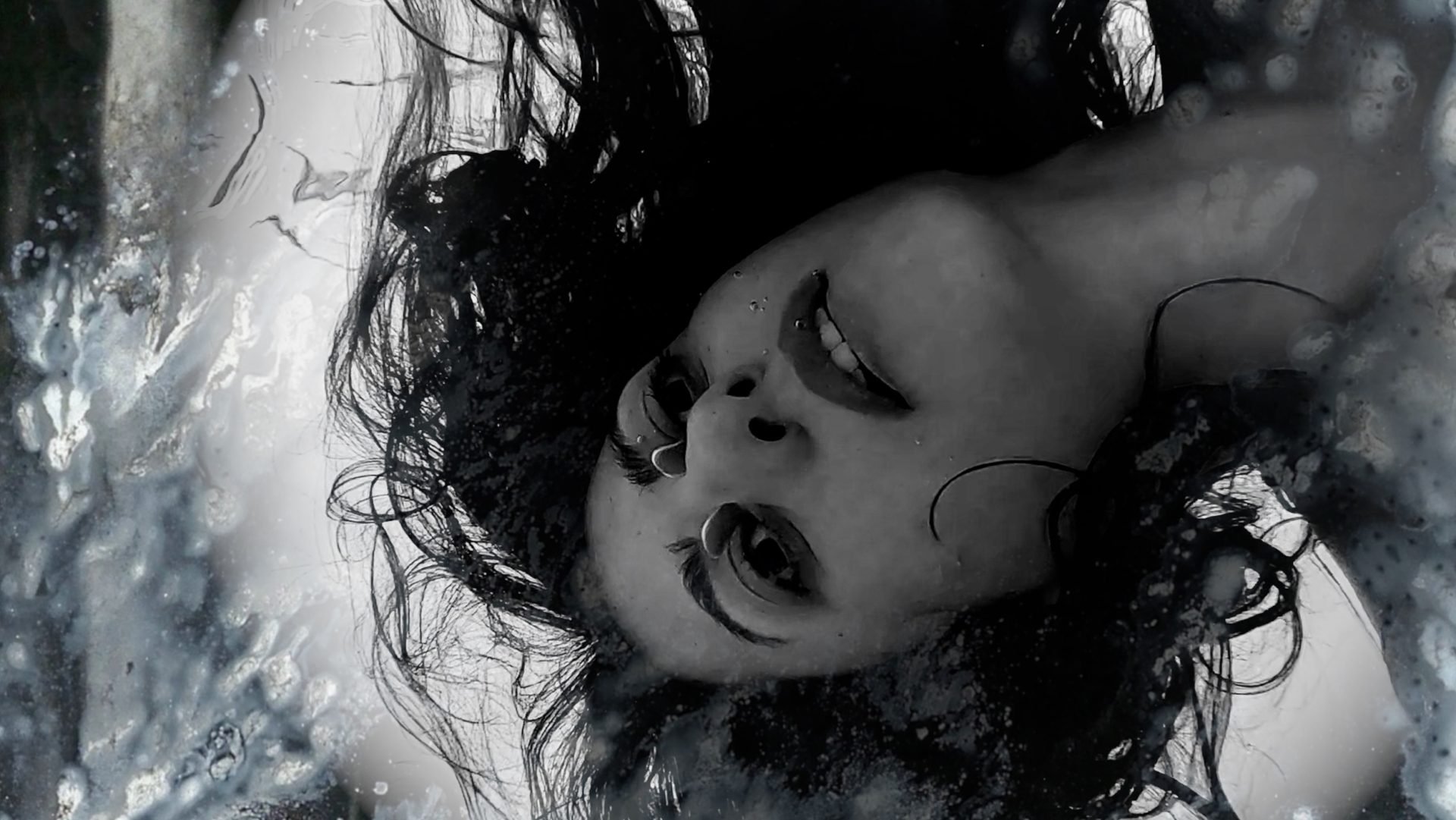
Maud the Moth, one of Spanish-born, Scotland-based Amaya Lopez-Carromero’s musical personas, returns with The Distaff , a darker, more intimate, harder hitting record than any of her three previous releases.
The album is imbued with so much meaning, pulsing with existence and loss. The Distaff is pure feeling transposed, woven together like an intricate patchwork of memory, identity, and grief.
The Distaff is a cipher of womanhood, transgenerational trauma, of identity unraveled and rewoven through time by the hands of those who came before, and those who follow. There is something ancient about it, something almost inescapable, an organic quality as natural as the turning of the seasons, as instinctive as birds’ chirping. Spinning and weaving, long the sacred work of women, become a language through sound: a liturgy, a questioned legacy, a means of survival through self-expression.
There is no doubt this is an album born from profound emotional investment, as if every second of its forty minutes carries within it a fathomless weight, a burden of history and experience that can never truly be articulated. As a listener, there is no easy path though it — it pulls, it twists, it burrows into places long untouched, and the only way is to submit to its shifting light and kaleidoscopic heaviness. Layer upon layer, it unfolds, each new subtly introduced element (saxophone, cello, violin, synths) adding to its depth. Reverence, remembrance, relentless emotion are spun into music.
Sebastian Rochford’s drums beat like a syncopated heart, each start and stop an old wound reopening, a blade turning. The way they often pan, shifting from one ear to the other at different volumes, creates a feeling of perplexity, an inescapable presence. The Distaff pushes forward with a force both spectral and visceral, pulling one into its dark cinematic vastness. It is an album made of echoes, of abandoned homes in the countryside, of footsteps through silent halls, of birds and hounds in the distance: snippets of personal history carried deep into the marrow of things.
Yet beyond the rhythmic turns of piano keys, The Distaff carries a deeper burden etched into its physical form. Womanhood has long been seen as a continuum, a bridge between the earthly and the divine, perhaps as a vessel of life’s endurance. But what happens when this tether feels more like a shackle? What if the expectation of labour and servitude is not a gift, but a cage, a source of suffocation rather than pride? Amaya sings about that burdened body: indispensable, overlooked, used, praised for its utility but never for its freedom. Womanhood, like spinning, thus becomes circular — a cycle of service, and an unbroken thread of survival. The dread it carries is life itself, delicate yet imperishable.
Maud the Moth’s The Distaff is a weaving of the feminine, a declaration of selfhood as a Spanish woman in a land that can feel foreign and cold, wrapped in an English tongue. It is cohesive even as it resists easy labels. Piano lands with weight and purpose, drums drag in the tectonic gravity of post-metal, cello and synths tangle together in experimental beauty. This is a work of shifting textures, of fluid genre, yet one with an indisputable essence. It is an experience as much as it is a piece of music, an invitation to step into a world that is beautifully devastating. Listen, and you will look inward. Listen: one day, we will spin free.
Follow Maud the Moth on the larvarium | bandcamp | instagram | facebook | spotify | youtube