
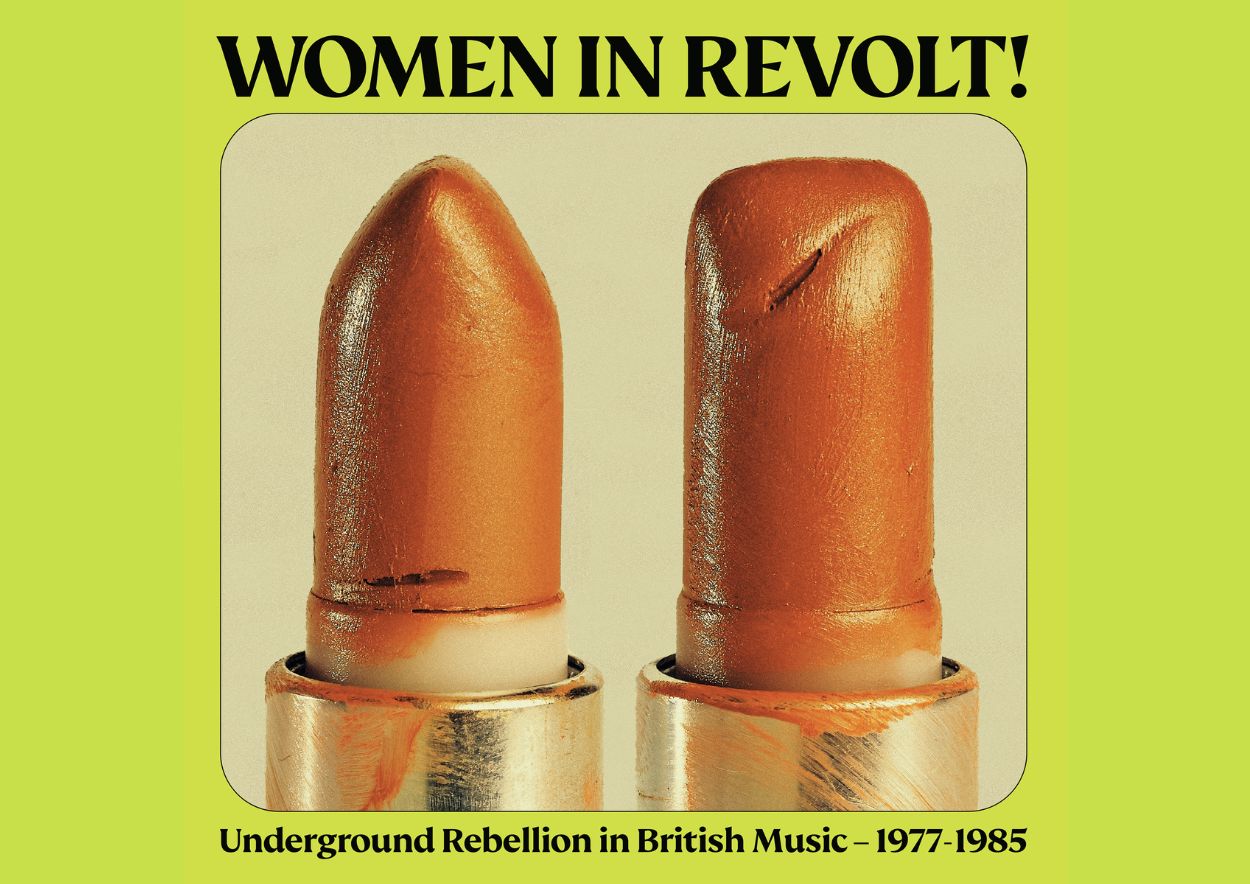
Women in Revolt! is a 14-track album that immerses us in a musical revolution. It’s very important to remember the women who came before us, to remember their struggles but also to get inspired by their stories. The album takes on that mission for the years 77-85 and brings us a collection of bands creating outside of the mainstream and often overlooked by history, despite their importance.
In response to the Tate Museum’s exhibition ‘Women In Revolt! Art and Activism in the UK 1970-1990’ [check out our podcast coverage of the opening back in November], Music for Nations brings us an album co-compiled by the exhibition’s creators Linsey Young and Julie Weir, head of the label. Through the music, we discover a big facet of feminist movements, and in a way, we get a good glimpse at punk’s evolution.
There are no surprises on this record, but it’s always a pleasure to get your classics in order. I’m just picking out three tracks to review here. To chose from such a record, was a very hard exercise, so please listen to the whole album and don’t take this selection for anything other than subjective.
The Slits was one of the first, if not the first, punk group made solely by women. As Gina Birch told She Shreds Mag, seeing The Slits was like being granted permission:
“It never occurred to me that I could be in a band. Girls didn’t do that. But when I saw The Slits doing it, I thought, ‘This is me. This is mine’.”
Gina Birch, The Raincoats
The song chosen is ‘Typical Girls’ from their debut LP Cut, a track that mixes their punk roots with reggae influences. And what a video!
Palmolive and Kate Korus, founding members of The Slits, went on to join The Raincoats with Gina Birch and Ana Da Silva. The track chosen for this album is ‘No side to fall in’, the song opening their debut LP. Deeply rooted in the DIY culture, this ragged track gives us a taste of the band’s passion for experimentation.
Kate Korus also formed the band Mo-dettes and this album highlights their biggest hit ‘White Mice’, written by Jane Crockford. She revealed to Punk Globe that the song is “about seducing boys…it is the girl as predator and this disturbed Rough Trade, our distributors, as not being correct! But it was and still is a happy celebration of dating and loving as young, emergent women”. The song was self-released and a hit on the indie charts.
It seems that I have reviewed three songs from the same year, 1979. It’s funny to see how the connections are made and the richness of independent music during that time. We can all take pride in the women that were doing it. So, in their name, go check the exhibit if you can, buy the vinyl, or listen to all of them on your favorite platform.