
The year is 2006. A younger, softer version of me is spending dark, lonely afternoons making friends on last.fm and spelunking through every idiosyncratic Icelandic band she can find. Most of these discoveries (friends included) never let go. Múm (pronounced moom) is one of them. Back then, my most unhinged daydreams did not include seeing ‘The Ghosts You Draw on My Back’ played live beside the friend I made back in those days in the music-obsessed internet trenches. Fast-forward nineteen years, and here I stand, all alone for three songs in the photo pit at the beautiful Islington Assembly Hall, trying to coax my heart into submission, quietly gasping as the lights dim and the quintet steps on stage with their menagerie of weird and wonderful instruments, water bucket included.


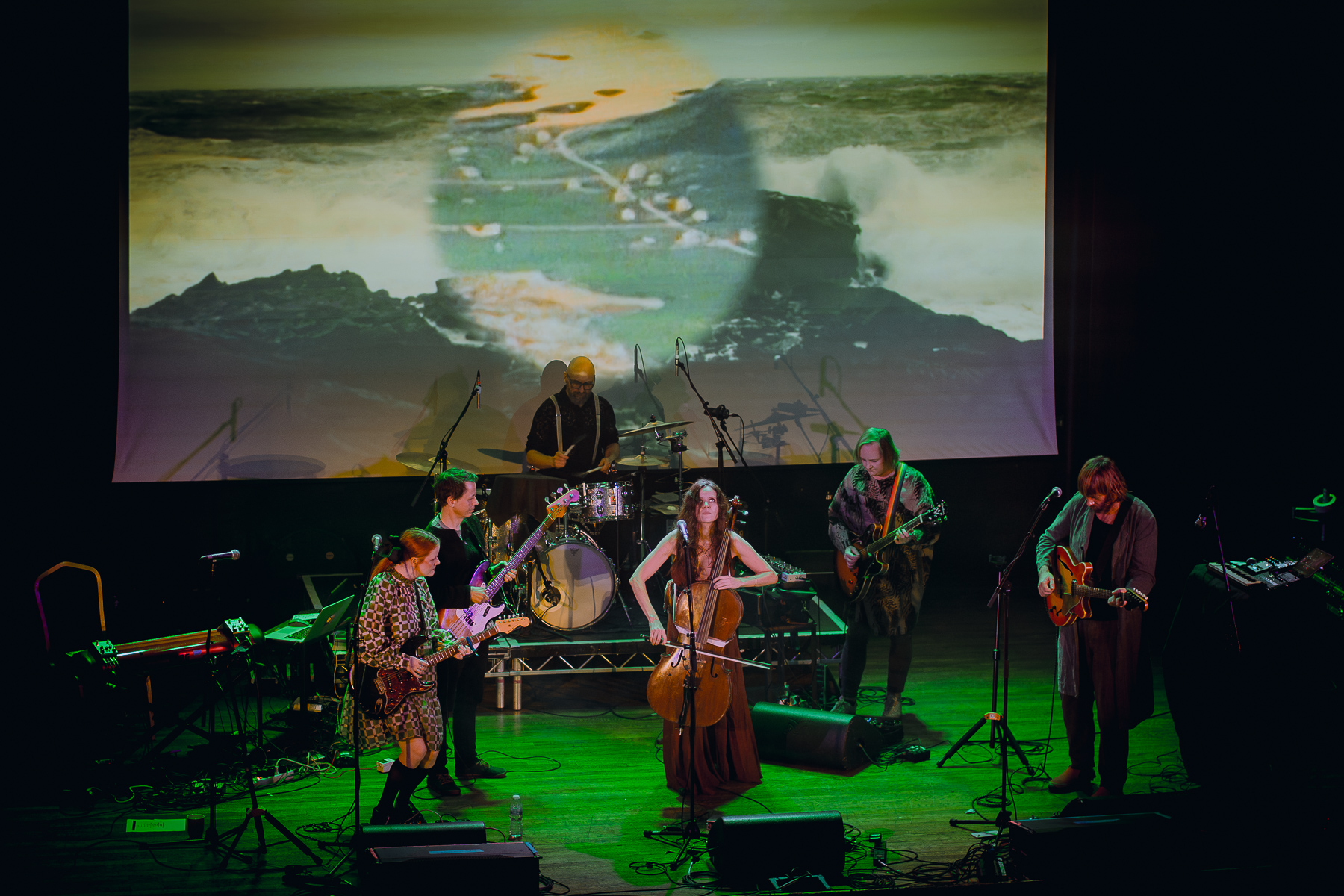
Music that is hard to define but easy to feel has always been my penchant and, as an aspiring writer of sorts, my cross to bear. Múm make this gentle, eerie folktronica that glides straight under the skin, and seeing it live is nothing short of spellbinding. On stage, they move as a single organism. Instruments change hands, and the entire performance turns visually and aurally kaleidoscopic. Hushed voices whistle into the mic; keyboard, guitar, and samples seem to breathe underneath. Electronic glitch beats tell their own nostalgic stories. With its melodica-heavy sweetness, the whole thing whirs with childlike feeling, helped along by Sigurlaug Gísladóttir (guitar, mostly) in their babydoll dress, rosy cheeks, and long ponytail, which all add to the strange musical dollhouse atmosphere.
Gyða Valtýsdóttir holds her cello almost as if it were an infant, red satin ribbon wrapped around it, perhaps a silent reminder that beauty and sacrifice are often intertwined. Everything feels like a tender fairytale, where negative space, flickering voices, and the delicate mix of analog and electronica appear impossibly intentional, as if assembled with minute care by tiny hands arranging pieces of an old wristwatch. Behind the band, layered projections shift and fold into one another, sometimes turning into waves crashing against volcanic beaches, other times alluding at important moments in the band’s history. The lighthouse keeper’s house where 2002 album Finally We Are No One was recorded is also quietly claiming the main character role for a bit. Next to me, a group of lads about the age I was when I first started listening stand completely entranced, and I feel a strange mix of joy and pride, not only directed at them but also at the earlier version of myself who first found this music. I do not know them, yet I get to feel like a torchbearer on a random Monday evening in November.
Amid the gossamer of their melodies, there is always space for humour. The band leave the stage, as is customary, before a well-deserved encore. Not all of them return immediately because “the bathroom is really far away” which opens the floor to a bit of audience natter.
“What’s your next song about?” someone calls.
“The next song is about periods. Who is on their period?” Gyða replies—seconds before Moon Pulls begins.
Feel the moon pull your lover’s blood up to the sky, the sky…
If this is not magic, I’m not sure what is.


There could hardly have been anything to make the evening better, yet the announcement that County Fermanagh’s Róis would be opening was the cherry on top. Dressed in black, with ornate lace covering her head, she emerged carrying the weight and beauty of her 2024 album Mo Léan, which draws on the haunting Irish keening tradition. Her captivating voice echoes the otherworldly tones of Elizabeth Fraser, and knowing a bit about this tradition deepens the spell. It stirred something familiar in me, memories of time spent as a child in a remote corner of the world, where a similar practice lingers to this day: a lament that warps the air and sends shivers down the spine. Backed by drums, Róis shifts the sadness into something highly danceable by the end of her set, a curious invitation to move even as melancholy lingers.